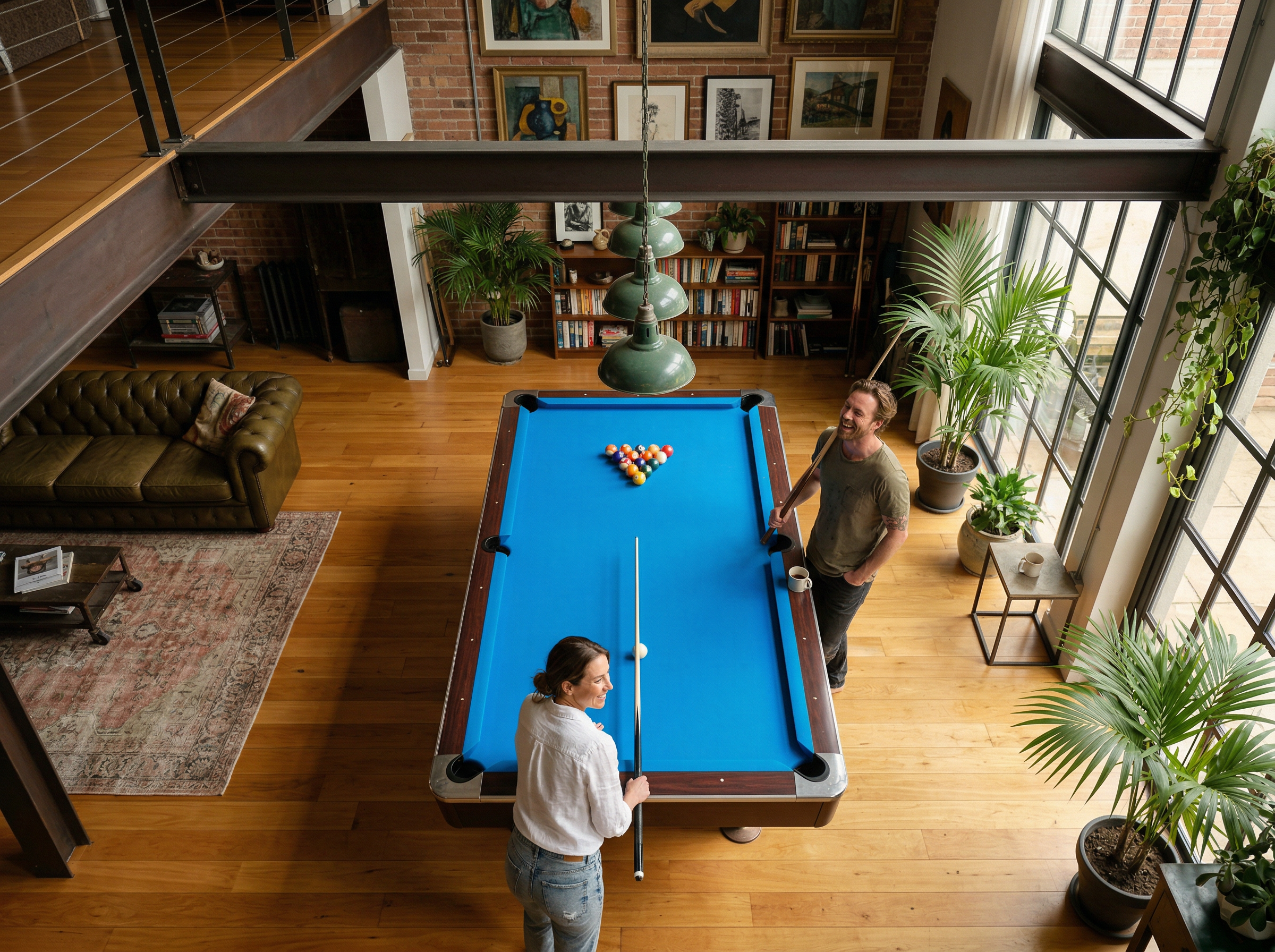

Most residential pool table cloth needs replacement somewhere between five and ten years after installation. The exact timing depends on how often the table is used, how the room is treated, and the cloth itself. Worsted cloth tends to run on the longer end of that range. Napped cloth replaced on a regular cleaning schedule runs in the middle. Cloth that has been spilled on, sun-bleached, or used aggressively replaces sooner.
This piece walks through the signs that it is time, what the recloth process involves, and how to plan the replacement.
What Cloth Looks Like When It Is Worn
The cloth is the only part of a pool table that is meant to wear, and the wear is observable across several dimensions. None alone is decisive. A combination is.
Worn cloth typically shows:
- Visible thinning, particularly in the high-traffic zones near the spot, the head string, and the foot string where breaks happen.
- Pilling on napped cloth, which is the small balling of fibers that builds up over years of brushing and play.
- A general dulling of the color, particularly along the rails and in any zone with direct sun exposure.
- Chalk staining that no longer brushes out.
- Loose fibers that come up on a brush stroke.
- A loss of consistent stretch, which can show up as small wrinkles near the corners that did not used to be there.
- Tears, holes, or burns from a sliding cue tip or a dropped chalk cube.
A single worn area is not necessarily a recloth event. A burn near a corner pocket can sometimes be lived with, and a small pill can be trimmed with cloth shears. A combination of thinning, pilling, color shift, and loss of stretch is the signal that the cloth has reached the end of its useful life.
How the Game Tells You Before the Eye Does
Worn cloth usually plays differently before it looks worn enough to replace. The signs are subtle and accumulate gradually, which is why most buyers do not notice them until a friend visits, plays a few racks, and remarks that the table is rolling slow.
The most common play-side signs of worn cloth are:
- Long rolls that come up short of where they used to.
- Cushion rebound that feels weaker, particularly on long bank shots.
- A cue ball that tracks slightly off line on shots where it used to track straight.
- Chalk that builds up on the cushions in places it used to brush off.
- A general feeling that the table is "slow" or "tired," even though the cabinet and the slate underneath have not changed.
If two or three of these are happening, the cloth is wearing out. Cushions that have lost rebound can also be a separate problem, but cushion failure typically takes longer than cloth failure, and most cloth replacements happen before the cushions need attention.
The Typical Residential Cycle
For a household that uses the table a few times a week, with napped cloth and regular light brushing, the typical cycle is seven to ten years. With worsted cloth, the cycle is closer to eight to twelve years because the smoother surface resists pilling and visible wear.
For a household that uses the table heavily (daily play, league practice), the cycle compresses to four to six years. For a household that uses the table once a month, the cycle can stretch to twelve or fifteen years.
The variable that breaks the math is sunlight. A table that sits near a south-facing window without UV protection can show meaningful color shift in two to three years on the sun-exposed side. The cloth wears unevenly and replaces sooner than the room expects. If a table is near a window, UV-blocking film on the glass and a cloth cover when the table is not in use are the two preventive measures worth taking.

View the product
The Dutchess
Diamond Inlays. Rich Wood Tones. Heirloom Presence.
What the Recloth Process Involves
A recloth is a half-day job for a trained two-person crew. The process is roughly:
- The crew arrives, removes any accessories from the room, and clears space around the table.
- The pockets and rails are removed from the cabinet. The rails are set aside.
- The old bed cloth is stripped from the slate.
- The slate is checked for level and shimmed if needed. This is a useful moment to confirm the bed is still sitting properly, and a good crew will catch and correct any drift.
- New bed cloth is stretched over the slate, with consistent tension across the entire surface, and tucked at the rails.
- The rail cloth is replaced separately on each rail. Each rail is stripped, the cushion is checked, and new cloth is stretched and stapled to the rail with consistent tension.
- The rails are remounted to the cabinet.
- The pockets are reinstalled. The crew does a final check on rebound and play.
- The room is cleaned, the accessories returned, and the table is playable from the moment the crew leaves.
Cloth needs about a week of light play to settle into the new stretch, and the cushions will read slightly differently for the first few sessions before the new rail cloth seats. After a week, the table plays as a freshly installed surface.
What Else to Replace at the Same Time
A recloth is the natural moment to address other wear items. The most common additions are:
- Cushion replacement, if the rebound has weakened. Most C.L. Bailey tables run their original K-66 cushions for 15 to 25 years before needing replacement, but a high-use table may want fresh cushions on the second recloth.
- Pocket replacement, if the leather drop pockets have softened, stretched, or torn.
- Cabinet refinish or touch-up, if the cabinet has accumulated nicks or scratches that the buyer wants addressed. A solid hardwood cabinet accepts a touch-up cleanly, which is one of the advantages of solid hardwood over composite.
- Accessory refresh, including a new set of cues, a new brush, and a new cover.
Most dealers will scope all of this on the recloth visit. The cloth replacement is the anchor service, and the rest are add-ons.
Choosing Cloth at Replacement
The recloth is the right moment to revisit the cloth choice. Many buyers start with napped Mali, live with the table for several years, and switch to Velocity Pro worsted at the first replacement because they have logged enough hours to want the truer roll. Others stay with napped because the household has not changed and the cloth has worked.
Color is also worth revisiting. The traditional billiards green is the residential default and reads well against most wood finishes. A buyer who has lived with green for years and wants something different has the option at recloth. A blue-gray reads modern. A burgundy reads more formally. The Mali and Velocity Pro color libraries are at our cloth page.
The detailed comparison of worsted versus napped cloth is at the worsted vs napped guide.
Cost and Scheduling
Cloth replacement pricing comes from your authorized dealer and varies with table size, cloth choice, and any additional services on the visit. The price typically includes the cloth itself, the labor for the half-day visit, and the disposal of the old cloth.
Scheduling generally requires a week or two of advance notice, and most dealers can schedule a recloth around a date that works for the household. The room needs to be reasonably clear (table moved away from walls is not necessary, but the crew needs working space around the perimeter).
If the recloth is being combined with a cabinet touch-up or a cushion replacement, plan for a longer visit and discuss the sequence with the dealer. Some shops handle all of it on a single visit. Others split the work across two visits if the cabinet refinish requires drying time.
Where to Go from Here
The choice between worsted and napped cloth, with detailed play characteristics, is at the worsted vs napped guide. The full table construction conversation, including how cloth is initially stretched on installation, is in how a C.L. Bailey table is built.
When you are ready to schedule a recloth, your authorized dealer through the dealer locator is the right call. They handle the recloth as a service, including the cushion and pocket questions if they come up. The cloth itself is selected through the dealer with swatches and color matching, and installation is the same crew model that handles the original delivery.
Cloth replacement is the rhythm of owning a serious pool table. The cabinet, the slate, and the substructure last a lifetime. The cloth lives in cycles of years rather than decades, and replacing it is the moment the table feels new again.