
Worsted cloth is faster, truer, and more durable. Napped cloth is more forgiving, more traditional, and more familiar to most American homes. The choice between them comes down to how seriously you play and how much forgiveness you want from the surface. This piece walks through the practical differences and how to decide.
C.L. Bailey tables ship with a choice of two cloth lines: Mali wool-nylon blend, the classic napped American billiard cloth, and Velocity Pro worsted, the high-performance alternative. Both are 21 ounce, both are available in matching color libraries, and both are installed by the same dealer crew on installation day.
What Worsted and Napped Mean
Pool table cloth is a wool or wool-blend fabric that is stretched over the bed and rails. The two construction methods are worsted and woolen, and they produce different surfaces with different play characteristics.
Worsted cloth is woven from long-staple wool fibers that are combed parallel before spinning. The result is a tight, smooth surface with a uniform direction that does not raise a nap. Napped cloth (sometimes called woolen or felt) is woven from shorter, more random fibers and finished with a brushing process that raises a soft pile on the surface.
The visual difference is straightforward. Worsted cloth looks like a fine smooth wool fabric, similar to a high-end suit. Napped cloth looks soft and slightly fuzzy, similar to a wool blanket. The play differences come from how the ball reads the two surfaces.
How They Play Differently
A ball rolling on worsted cloth travels faster and farther, and it travels in a straight line. The smooth surface produces minimal friction, which means a cue stroke produces a longer roll, and the cue ball reaches the cushion on the line it was sent.
A ball rolling on napped cloth travels slower and shorter, and it tends to drift slightly toward the direction of the nap. The raised pile creates friction that slows the cue ball, which produces a more forgiving game where mistakes have time to correct themselves. The nap also introduces a small directional bias, which experienced players read and account for.
For a serious player, worsted cloth is preferable because it removes the variability. The cue ball goes exactly where it is sent, and the player is responsible for every line. For a casual or mixed-skill household, napped cloth is preferable because it slows the game down and gives players more time to set up the next shot.
| Characteristic | Napped (Mali) | Worsted (Velocity Pro) |
|---|---|---|
| Speed | Moderate | Fast |
| Roll | Slight directional bias | Straight, consistent |
| Forgiveness | High | Low |
| Durability | High | Higher (no pilling) |
| Cleaning | Brush regularly | Brush less often |
| Best for | Casual play | Serious play |
Composition and Weight
Both Mali and Velocity Pro ship at 21 ounce, which is the residential standard. The weight refers to the cloth itself rather than the ball weight, and a heavier cloth wears longer than a lighter cloth.
Mali is a 75 percent wool, 25 percent nylon blend with a Teflon coating. The nylon adds tensile strength and stain resistance. The Teflon further resists liquid stains and helps the cloth shed dust during regular brushing. Mali is the cloth the largest American billiard cloth manufacturer (founded 1826) has been producing for nearly two centuries, and it is the most widely installed residential cloth in the country.
Velocity Pro is an 85 percent wool, 15 percent nylon worsted blend. The higher wool content delivers a smoother weave, and the worsted construction produces the nap-free surface. The nylon adds durability without compromising the worsted character. Velocity Pro is the residential equivalent of the cloth used in tournament rooms, including Simonis 860 and similar premium worsted cloths.
Durability: Which Lasts Longer
In a residential setting, both cloths last roughly five to ten years before showing wear that affects play. The duration depends more on how much the table is used than on the cloth itself.
Worsted cloth has an advantage in resisting pilling, which is the small balling of fibers that develops on napped cloth over time. Pilling does not affect play in any meaningful way, but it is visible up close, and worsted cloth keeps a cleaner appearance for longer.
Napped cloth has an advantage in resisting visible wear from cue chalk. Chalk works into the surface differently on the two cloths. On napped cloth, the chalk distributes into the pile and shows less visibly. On worsted cloth, chalk can show as a slight dusting near the rails until the cloth is brushed.
For most residential households, the durability difference is academic. Both cloths outlast the patience of most owners, and both are designed to be replaced on a multi-year cycle. The detailed treatment of when to replace cloth is at the cloth replacement guide.

View the product
The Skylar
Clean Lines. Convertible Top. Modern in Every Detail.
Cleaning and Care
Both cloths benefit from regular light brushing with a soft pool table brush. Brushing removes chalk dust and any debris that has worked into the surface. The motion should be along the length of the table from one short end to the other, with the brush running in the direction of the nap on napped cloth.
Worsted cloth tolerates a slightly less frequent brushing schedule because the smooth surface does not trap chalk in the same way. Napped cloth wants more regular attention, particularly if the table sees frequent use.
Liquid spills are the worst case for either cloth. Wool absorbs liquid quickly, and a spill that sits on the cloth long enough will leave a stain. Both Mali (with its Teflon coating) and Velocity Pro resist initial absorption, which gives a few seconds to blot the liquid up before it works in. Use a clean white cloth and blot rather than rub.
A vacuum with a low-suction upholstery attachment can be used carefully on both cloths if dust accumulates. Avoid powerful vacuums, beater bars, and any attachment that could catch the surface. Detailed care guidance is at /care-guide.
Which Cloth for Which Player
The honest answer is that most first-time buyers should start with napped cloth and most serious players should start with worsted. The former is more familiar and more forgiving. The latter is more rewarding to play on once you have logged hours.
If you are buying a table for casual entertaining and family play, napped cloth (Mali) is the right starting choice. The slower roll and more forgiving feedback suit a household where players of varying ability are at the table. Most American homes have napped cloth, which means visiting players will recognize it.
If you are buying a table for serious play, or if you have logged hours on a worsted cloth in a commercial hall and you want the same surface at home, worsted cloth (Velocity Pro) is the right call. The truer roll and faster speed reward precise play and produce a more demanding game.
If you are uncertain, the second most common pattern we see is buyers starting with napped cloth and switching to worsted on the first cloth replacement. By that point, the household has settled into the table, and many buyers find they want the truer roll once they have played enough to feel the difference.
Color Choice
Both cloths are available in a wide color library. Mali offers more than 22 colors. Velocity Pro offers 12 colors, which is the standard worsted range.
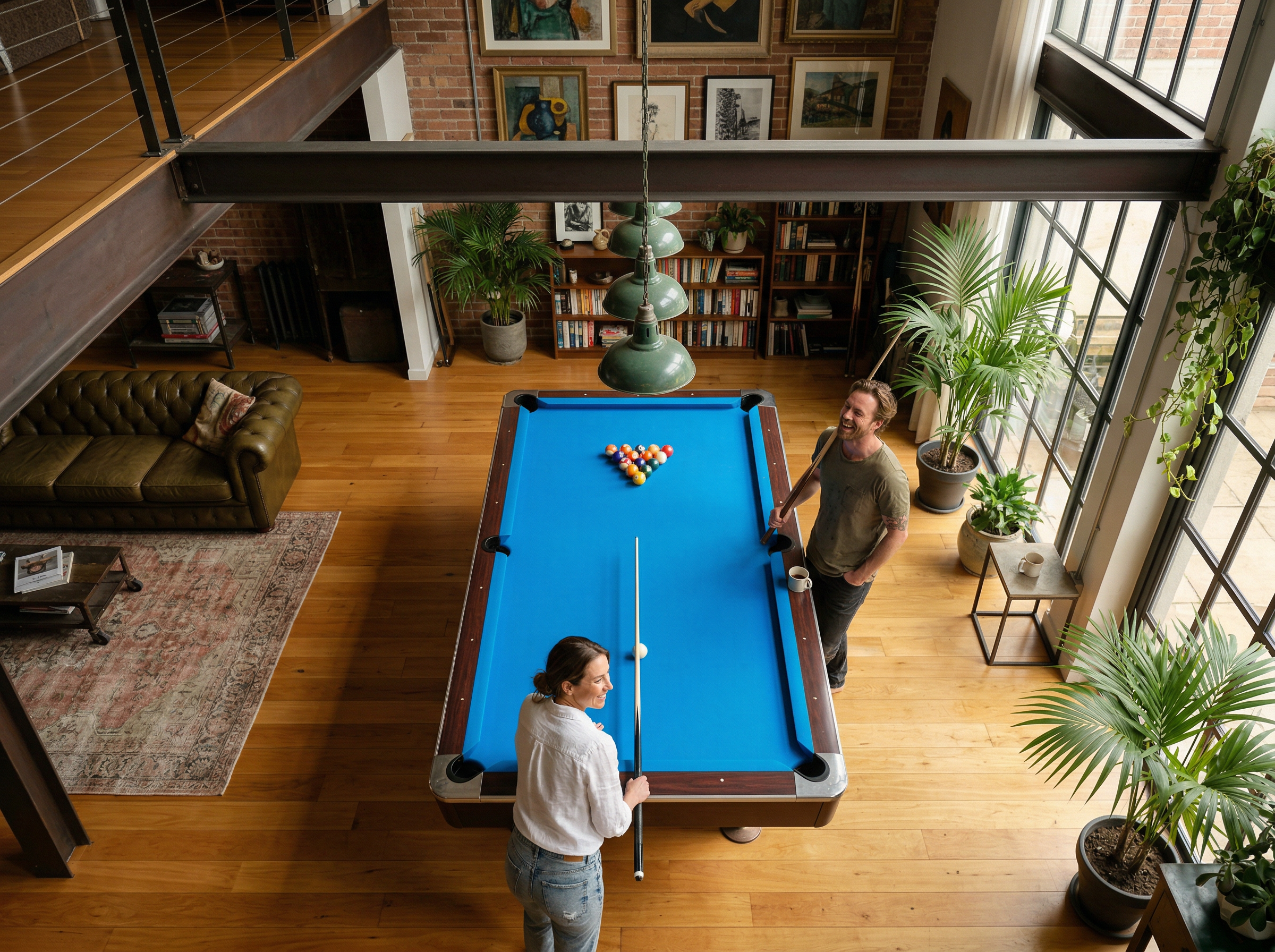
A traditional billiards green reads well against most wood finishes and is the classic American color. A blue-gray works well in modern rooms. A burgundy reads more formally. Bright reds, bright blues, and saturated colors are striking in photographs but tiring in a room you spend hours in.
Color affects how the balls read. A light cloth (gray, tan) makes the balls read with high contrast. A dark cloth (deep green, navy, burgundy) makes the balls read with lower contrast and a more focused look. The traditional billiards green is the residential standard for a reason.
The swatch viewer at our cloth page shows both lines side by side. Your authorized dealer can also provide physical swatches before installation for color matching against the room's existing finishes.
Where to Go from Here
The full construction sequence (including how cloth is stretched on installation day) is in how a C.L. Bailey table is built. The replacement cycle and what to look for as cloth wears is at the cloth replacement guide.
When you are ready to choose, the cloth swatches and the order are handled through your authorized dealer through the dealer locator. Both Mali and Velocity Pro are available on every C.L. Bailey pool table, and the choice can be made at the time of purchase or at the time of replacement.
Cloth is the only major component on a pool table that is meant to be replaced. The first choice is not permanent, and many buyers find their preference clarifies once they have played the table for a few years.

